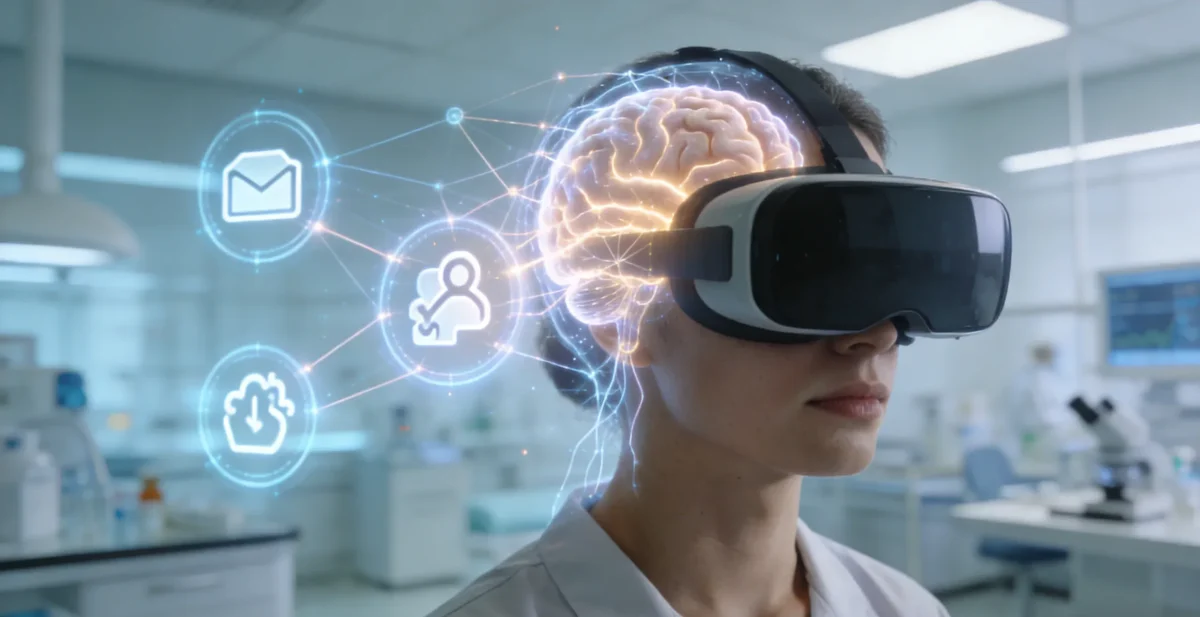






How VR cognitive training affects neuroplasticity
2026-01-04
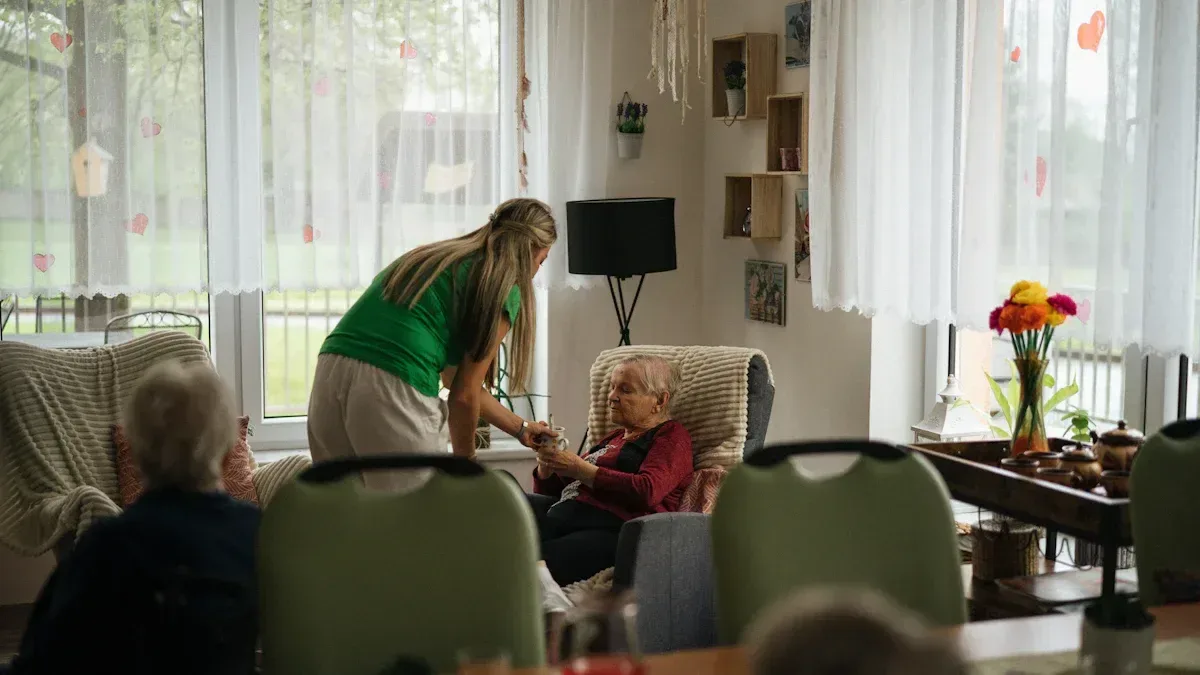
Remote Cognitive Monitoring Makes Caregiving Easier at Home
2026-01-15
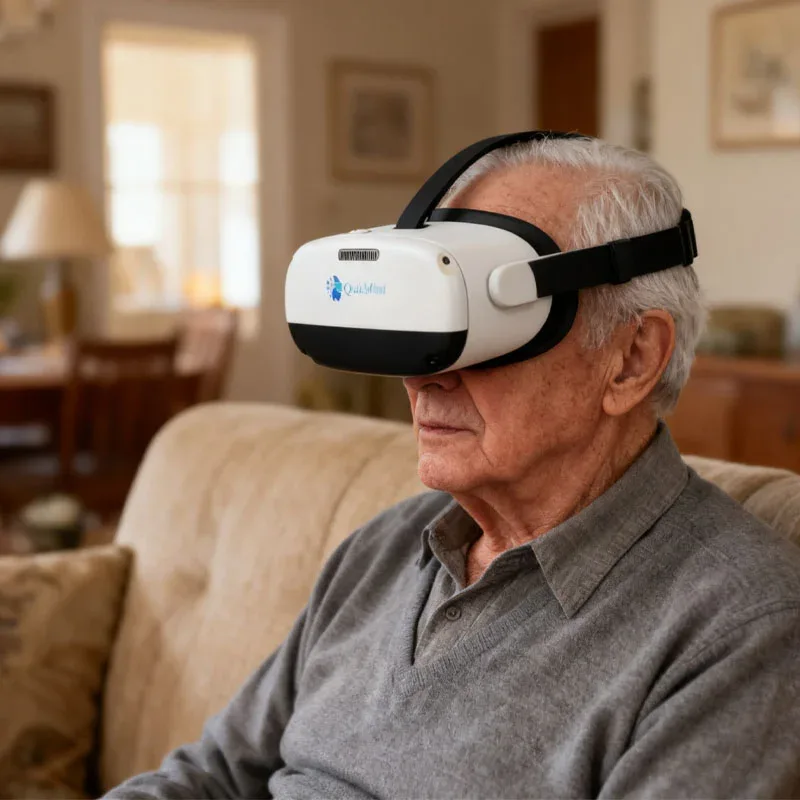
You may wonder if VR Therapy can truly support people with dementia at home. Clinical studies show that immersive VR is safe and well-received, offering positive experiences for people with dementia. Many users report better mood and improved engagement during sessions. The technology empowers you to provide meaningful therapy in a familiar environment. Here is a summary of research findings:
| Evidence Type | Description |
|---|---|
| Safety | Use of immersive VR is feasible and does not negatively impact dementia care. |
| Effectiveness | Users experience potential improvements in cognitive and motor functions. |
| Mood Enhancement | Participants show better mood after VR sessions. |
QuickMind® brings this innovation into your home, making cognitive therapy both accessible and engaging for your loved one.
Key Takeaways
- VR Therapy offers a safe and engaging way to support individuals with dementia at home, enhancing their mood and cognitive function.
- Families can see immediate benefits, such as reduced anxiety and improved engagement, making therapy sessions more enjoyable and meaningful.
- Personalizing VR experiences to match your loved one’s interests boosts motivation and participation, leading to better therapeutic outcomes.
- Regular supervision and a safe environment are crucial for effective VR Therapy, ensuring comfort and maximizing benefits during sessions.
- Using QuickMind® Home provides families with a tailored approach to cognitive therapy, making it easier to track progress and adjust activities.
Can VR Therapy Help at Home?
Immediate Benefits for Dementia
You can see positive changes in your loved one soon after starting VR Therapy at home. Many families notice improvements in mood and engagement during sessions. Immersive reminiscence activities often help reduce neuropsychiatric symptoms, such as agitation or anxiety. These benefits may last for weeks or even months after the intervention. You may also observe that VR Therapy helps preserve cognitive function, supporting memory and attention.
Some of the most common immediate benefits include:
- Reduced neuropsychiatric symptoms, such as agitation and anxiety
- Improved mood during and after sessions
- Enhanced engagement and participation in daily activities
- Lasting effects that may persist for months
Tip: You can use VR Therapy to create meaningful moments and spark conversations with your loved one. Many families find that these sessions unlock memories and provide comfort.
Who Can Benefit from Home VR Therapy
You may wonder if VR Therapy suits your family member’s needs. Research shows that a wide range of individuals with dementia can benefit from home-based VR Therapy. Older adults with mild to moderate dementia often experience improved cognitive function and reduced social isolation. People with Alzheimer’s disease and vascular dementia also show positive responses in studies.
Here is a summary of groups who benefit most:
| Demographic Group | Benefit from VR Therapy |
|---|---|
| Older adults with mild to moderate dementia | Improved cognitive function and reduced social isolation |
| Individuals with Alzheimer’s disease | Most commonly sampled population in studies |
| Individuals with vascular dementia | Noted for positive impacts in several studies |
You may care for someone living in a long-term care home or at home. VR Therapy can increase engagement and provide new topics for conversation. Reminiscence therapy through VR has shown promise in improving psychological well-being, especially for those who feel isolated.
Barriers to adoption exist, but solutions continue to emerge. Integrating VR Therapy into daily routines becomes easier with support and training. Skilled VR champions help families and caregivers feel comfortable with the technology. You can access resources and guidance to ensure a smooth experience.
How VR Therapy Works for Dementia
Brain Stimulation with VR
You can use VR Therapy to stimulate different areas of the brain affected by dementia. The immersive environment captures attention and encourages active participation. This approach helps you or your loved one practice memory, attention, and problem-solving skills in a safe and engaging way. Studies show that VR Therapy leads to greater improvements in cognitive function compared to traditional cognitive stimulation methods.
| Therapy Type | Cognitive Function Improvement | Follow-Up Evaluation |
|---|---|---|
| VR Therapy | Significant improvements | Higher efficacy |
| Traditional Therapy | Improved cognitive function | Moderate efficacy |
VR Therapy enhances cognitive skills, memory, and overall brain function more effectively than traditional methods. The interactive nature of VR reminiscence therapy also shows higher efficacy in improving cognitive function.
Types of VR Activities
You will find a variety of VR activities designed to target specific cognitive deficits. VR-based games stand out as especially effective for improving cognitive function in people with dementia. These games use motion sensors and interactive gameplay to create a captivating experience. The immersive features increase engagement, which is essential for cognitive rehabilitation.
VR games, such as KiMentia, enhance both mental acuity and physical well-being. Motion-sensing games like Wii-Fit help improve balance and address cognitive challenges. Visual effects-focused games, such as Tovertafel, promote engagement and support cognitive health. These activities create immersive scenarios that stimulate thinking and evoke emotional responses. You can use these tools to make therapy sessions enjoyable and productive.
Tip: Choose VR activities that match your loved one’s interests and abilities. This approach increases motivation and supports better outcomes.
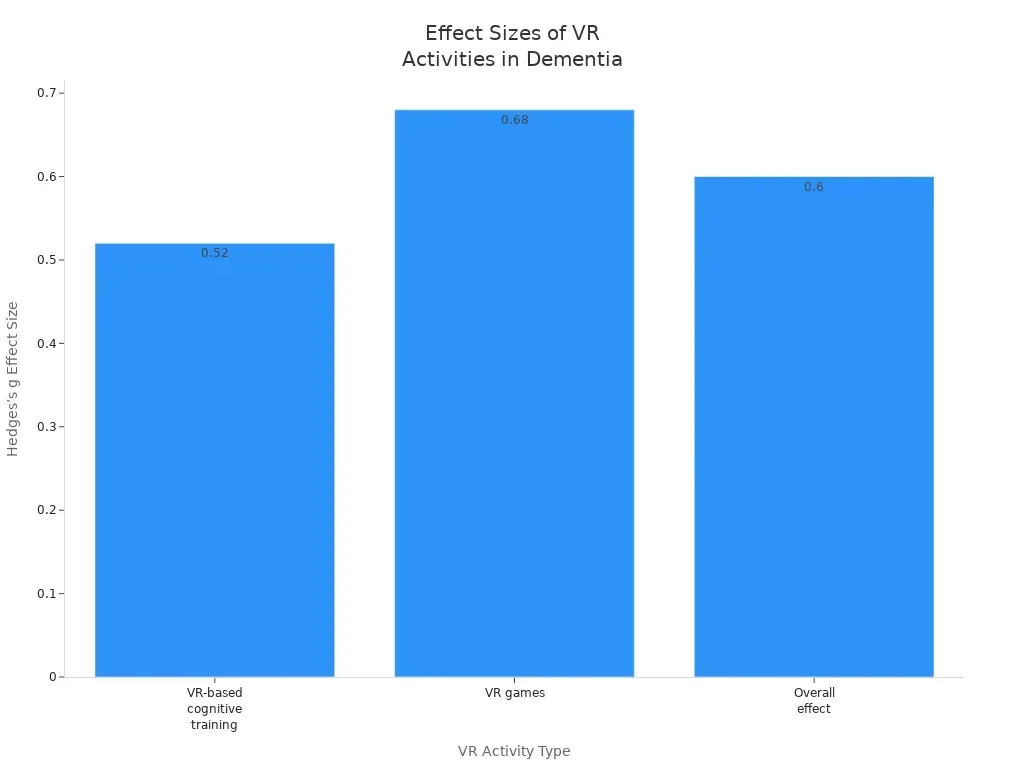
| Evidence Type | Findings | Effect Size |
|---|---|---|
| VR-based cognitive training | Significant positive effects on cognitive rehabilitation in MCI patients | Hedges’s g = 0.52 |
| VR games | Slightly larger effect size than VR cognitive training | Hedges’s g = 0.68 |
| Overall effect | Medium overall effect size | Hedges’s g = 0.60 |
VR-based cognitive training and games have shown significant improvements in cognitive assessments for people with mild cognitive impairment. The level of immersion in these activities is critical for achieving positive therapeutic outcomes.
Benefits of VR Therapy at Home
Cognitive and Emotional Gains
You can unlock powerful cognitive and emotional benefits for your loved one with home-based VR Therapy. This technology allows you to create immersive experiences that stimulate memory and attention. Many families notice that VR sessions help reduce anxiety and depression. You may also see your loved one become more engaged and responsive during and after therapy.
VR Therapy does not only benefit the person with dementia. As a caregiver, you can gain a deeper understanding of dementia symptoms by experiencing the world from your loved one’s perspective. This insight can foster empathy and reduce your sense of burden. The emotional connection you build through shared VR experiences can bring comfort and strengthen your relationship.
Enhancing Daily Life
You can use VR Therapy to enrich daily routines and promote independence. The technology offers cognitive stimulation that helps your loved one stay mentally active. It also provides emotional enrichment, which supports overall well-being. Many users find that VR sessions encourage social interaction and reduce feelings of isolation.
- VR Therapy enhances daily routines by making activities more engaging.
- It helps your loved one practice daily living skills in a safe, controlled environment.
- The immersive experiences can spark conversations and create meaningful moments.
Tip: Schedule VR sessions at the same time each day to build a positive routine and maximize benefits.
Reducing Symptoms and Improving Mobility
You can address challenging behavioral symptoms and support physical health with VR Therapy. Studies show that this approach reduces aggressive, anxious, and depressive behaviors. Many users experience lower stress levels, as seen in decreased heart rates during and after sessions. The calming effects of VR Therapy can improve quality of life for both you and your loved one.
- VR Therapy reduces agitation and fear.
- It supports better mood and emotional stability.
- The interactive activities can help maintain or even improve mobility, making daily movement safer and more enjoyable.
By integrating VR Therapy into your home care routine, you provide comfort, unlock memories, and support the overall well-being of your loved one.
Setting Up Home VR Therapy
Choosing Equipment and Software
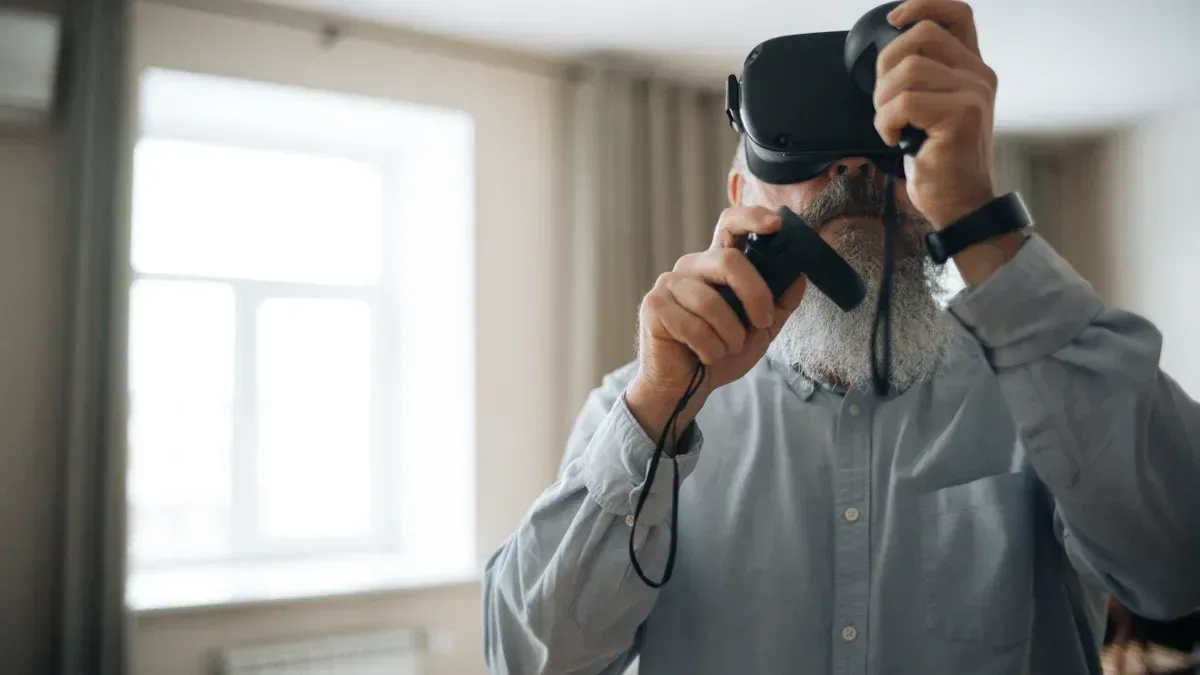
You want the best tools for your loved one’s cognitive health. QuickMind® stands out as a leading home-based solution. This system uses FDA-cleared technology and artificial intelligence to create personalized therapy plans. You can access QuickMind® remotely, which means you can track progress and adjust sessions from anywhere.
When you select equipment and software for dementia care, you should focus on features that support safety, comfort, and engagement. The table below outlines the most important considerations:
| Feature/Consideration | Description |
|---|---|
| Types of Experiences | Nature-based, historical, travel, and interactive experiences that promote relaxation and engagement. |
| User-Friendliness | Technology must be simple enough for individuals with cognitive impairments to use comfortably. |
| Safety and Supervision | Requires supervision by trained caregivers to ensure safety and maximize therapeutic benefits. |
| Personalization | Content must be tailored to individual preferences, cultural background, and dementia stage. |
| Cost Considerations | Specialized VR equipment and software can be a significant investment for families or facilities. |
QuickMind® offers two versions to meet different needs. The Home version is designed for personal use and fits easily into your daily routine. The Enterprise version serves hospitals and rehabilitation centers. The table below highlights the differences:
| Version | Intended Use | Features |
|---|---|---|
| QuickMind® Home | Personal use at home | Designed for individual dementia care needs |
| QuickMind® Enterprise | Institutional use (hospitals, rehabilitation centers) | Tailored for professional rehabilitation requirements |
You can choose QuickMind® Home for its convenience and seamless integration into your life. The system provides digital access, so you can view training history and performance metrics at any time.
Preparing a Safe Environment
You must prepare a safe and comfortable space before starting VR Therapy. Choose a quiet room with enough space for movement. Remove obstacles like rugs, cords, or furniture that could cause tripping. Good lighting helps you monitor your loved one during sessions.
You should always supervise therapy sessions. Stay close to offer support and respond quickly if your loved one feels dizzy or confused. Keep a chair nearby in case they need to sit down. Make sure the headset fits well and does not cause discomfort.
Tip: Use a checklist before each session. Confirm the area is clear, the equipment works, and your loved one feels calm and ready.
Step-by-Step Setup Guide
You can set up QuickMind® Home in a few simple steps. Follow this guide to get started:
- Unpack the Equipment
Open the QuickMind® Home package. Check that you have all components, including the headset, controllers, and charging cables. - Charge and Connect Devices
Plug in the headset and controllers. Wait until they are fully charged. Connect the system to your Wi-Fi network for remote access and updates. - Install the QuickMind® App
Download the QuickMind® app on your smartphone or tablet. Log in with your account details. - Personalize the Therapy Plan
Use the app to enter your loved one’s preferences, interests, and cognitive needs. QuickMind®’s AI will create a personalized therapy plan. - Prepare the Environment
Clear the space and check for safety. Make sure your loved one feels comfortable and understands what will happen. - Start the Session
Place the headset on your loved one. Launch the session from the app. Stay nearby to supervise and offer encouragement. - Monitor and Adjust
Watch your loved one’s reactions. Use the app to track progress and adjust activities as needed.
Note: Always end the session if your loved one feels tired or overwhelmed. Take breaks between sessions to prevent fatigue.
You can make VR Therapy a positive part of your daily routine. With the right setup, you support safety, comfort, and effective cognitive rehabilitation at home.
Personalizing and Ensuring Safety
Customizing VR Experiences
You can create a therapy plan that fits your loved one’s unique needs. QuickMind® uses artificial intelligence to analyze preferences, abilities, and progress. The system adapts each session, making activities more engaging and meaningful. Studies show that AI-driven VR therapy increases participation and cognitive engagement by up to 30% compared to traditional methods. You can select activities that match your loved one’s interests, such as nature walks, music, or familiar places. The AI curates personalized experiences and adjusts the difficulty level to keep your loved one motivated.
- You can address five key psychological needs: comfort, identity, attachment, occupation, and inclusion.
- The therapy plan can focus on memory recall, emotional comfort, or social interaction.
- You can adjust the environment, sensory input, and task complexity to suit your loved one’s abilities.
Tip: Regularly update preferences in the QuickMind® app to keep therapy sessions fresh and relevant.
Safety Tips and Monitoring
You play a vital role in ensuring safety during home-based VR Therapy. Prepare the room by removing obstacles and providing a stable chair. Always supervise sessions and watch for signs of fatigue or discomfort. QuickMind® supports safety with built-in monitoring tools. You can use wearables or smart watches to track physical activity and health metrics. Home sensors can alert you to changes in behavior or movement patterns. Caregiver training resources help you respond quickly to any issues.
| Tool Type | Description |
|---|---|
| Patient-Centric | Wearables and smart watches track activity, sleep, and health. |
| Caretaker-Centric | Training and awareness tools support caregivers in managing therapy. |
| Embedded Sensors | Home monitoring systems detect changes in behavior and alert caregivers. |
Note: Take breaks during sessions and check headset comfort often.
Real-Life Success Stories
Many families see real improvements with home-based VR Therapy. You may notice your loved one feels less anxious or depressed after sessions. Cognitive function often improves, with better memory recall and attention. Emotional well-being increases as patients engage in personalized activities and interact more with family members.
| Measure | VR Panoramas Group (Post-Intervention) | Improvement | Conventional Still Photos Group (Post-Intervention) | Improvement |
|---|---|---|---|---|
| Cognitive Function (MMSE Scores) | 25.3 ± 2.1 | +3.2 points | 23.1 ± 2.3 | +1.2 points |
| Subjective Well-Being | 17.8 ± 3.0 | +4.2 points | 15.2 ± 3.1 | +1.8 points |
| Engagement Level | 85% highly engaged | N/A | 60% highly engaged | N/A |
You can help your loved one achieve these results by personalizing therapy and ensuring a safe, supportive environment.
You can transform dementia care at home with VR cognitive therapy. Research highlights several benefits:
- Enhanced quality of life for patients
- Reduced anxiety and depression
- Improved memory recall and cognitive function
- Positive outcomes for caregivers
QuickMind® offers you an innovative solution for personalized therapy. Consult healthcare professionals to explore VR options. The future of dementia care looks brighter as immersive technology continues to empower families and support well-being.
FAQ
How safe is VR therapy for people with dementia?
You can trust VR therapy as a safe option. Studies show that most users tolerate sessions well. You should always supervise your loved one and prepare a clear space to prevent accidents.
What equipment do I need for QuickMind® Home?
You need the QuickMind® Home headset, controllers, and a smartphone or tablet with the QuickMind® app. The system connects to Wi-Fi for updates and remote access.
Can VR therapy replace traditional cognitive exercises?
VR therapy does not replace traditional exercises. You can use it as a supplement to enhance engagement and results. Many families combine both approaches for the best outcomes.
How do I know if VR therapy is working?
You can track progress using the QuickMind® app. The system shows performance metrics, session history, and improvements in cognitive function. Regular reviews help you adjust therapy for better results.