




How VR Fits into Modern Brain Wellness Routines
2025-12-25
VR cognitive therapy for dementia at home
2026-01-11


VR cognitive training changes your brain by increasing neural connections and boosting adaptability. You experience more efficient memory, attention, and task-switching when you engage in immersive environments. Early detection and personalized rehabilitation matter for cognitive health, especially if you face age-related decline. Recent studies show that fully immersive VR improves basic cognitive functions, while partially immersive VR enhances higher-order skills:
| Type of VR Immersion | Cognitive Assessment | SUCRA Score | Key Findings |
|---|---|---|---|
| Fully Immersive VR | MMSE | 81.7% | Improves orientation, recall, and attention through multisensory stimulation. |
| Partially Immersive VR | MoCA | 84.8% | Superior efficacy in visual attention and task-switching. |
Key Takeaways
- VR cognitive training enhances brain adaptability by increasing neural connections and improving memory and attention.
- Engaging in immersive VR environments leads to significant structural changes in the brain, boosting cognitive functions.
- Regular use of VR cognitive training can support recovery from cognitive decline and improve overall brain health.
- Compared to traditional methods, VR training offers a more engaging and effective way to stimulate neuroplasticity.
- VR cognitive training is beneficial for various populations, including older adults and individuals with neurological conditions.
How VR Cognitive Training Drives Neuroplasticity
Brain Adaptation and Rewiring
When you participate in VR cognitive training, your brain adapts in remarkable ways. The immersive environments stimulate your senses and challenge your mind, which leads to significant changes in brain structure and function. You experience increased gray matter density in your cortex, which supports better thinking and memory. The training also modulates neural activity, especially in the beta-band frequencies that play a role in attention and learning.
Tip: Regular engagement with VR cognitive training can help your brain become more flexible and resilient, making it easier to learn new skills or recover from injury.
Neuroimaging studies reveal that this type of training increases the volume of your hippocampus, a region critical for memory. You also see improved connectivity in networks responsible for attention and memory. These changes mean your brain rewires itself to process information more efficiently.
- VR cognitive training enhances neuroplasticity, leading to increased cortical gray matter density.
- It modulates neural activity, particularly in beta-band frequencies.
- Structural and functional brain changes include increased hippocampal volume and improved connectivity in memory and attention networks.
Neural Pathways and Synaptic Changes
Your brain forms new neural pathways when you interact with VR environments. This process, called neuroplasticity, allows you to adapt to new challenges and retain information more effectively. VR cognitive training engages multiple brain regions at once, which strengthens the connections between them.
| Brain Region | Change in Functionality |
|---|---|
| Bilateral Hippocampus | Increased functional connectivity |
| Parahippocampal Gyrus | Increased functional connectivity |
| Posterior Cerebellum | Increased functional connectivity |
| Amygdala | Increased functional connectivity |
You benefit from multisensory neural activation. VR environments encourage ‘rich encoding,’ which means your brain stores memories more deeply. The immersive nature of VR cognitive training provides varied stimulation, helping your brain form new connections faster. When you explore virtual worlds, your visual cortex processes spatial information, your motor cortex manages movement, and your hippocampus supports memory formation. This simultaneous activation leads to stronger neural pathways and better cognitive skills.
- Multisensory neural activation leads to stronger memory formation.
- VR environments promote neuroplasticity through varied stimulation.
- Immersive experiences accelerate brain change and adaptation.
VR vs. Traditional Cognitive Training
You might wonder how VR cognitive training compares to traditional methods. The difference lies in engagement, effectiveness, and the ability to stimulate neuroplasticity.
| Aspect | VR Cognitive Training | Traditional Cognitive Exercises |
|---|---|---|
| Engagement | High due to immersive and interactive nature | Often low due to lack of interactivity |
| Effectiveness | Potentially more robust cognitive benefits | Limited by patient adherence and engagement |
| Neuroplasticity | Enhanced through multi-sensory stimulation | Less effective in stimulating neuroplasticity |
Comparative studies show that VR-based training leads to significant cognitive improvements, especially in executive function and attention. For example, a 12-week interactive cognitive–motor game program using VR resulted in a notable increase in cognitive scores for participants. Older adults and individuals with mild cognitive impairment often see greater gains in attention and memory with VR cognitive training than with traditional exercises.
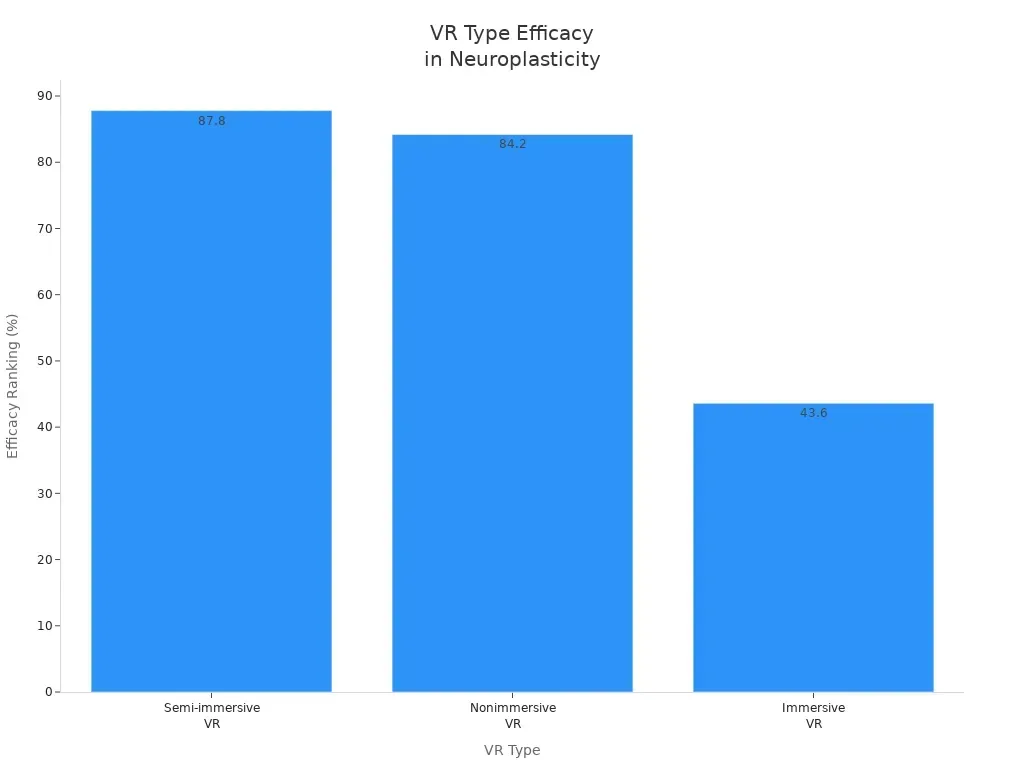
| VR Type | Efficacy Ranking (%) | Comparison Group |
|---|---|---|
| Semi-immersive VR | 87.8 | Attention-control group |
| Nonimmersive VR | 84.2 | Attention-control group |
| Immersive VR | 43.6 | Attention-control group |
| Group | Cognitive Improvement | Other Domains Impacted |
|---|---|---|
| VR-based Training | Significant | Emotional state, motivation |
| Traditional Training | Moderate | None |
- VR cognitive training has shown significant improvements in cognitive function, particularly in executive function and attention, in older adults compared to no intervention.
- Studies indicate that VR can lead to cognitive improvements in individuals with mild cognitive impairment, particularly in attention and memory.
By choosing VR cognitive training, you gain access to a more engaging and effective way to boost your brain health and support lifelong learning.
Cognitive Functions Improved by VR
Memory and Attention
You can strengthen your memory and attention by engaging with VR cognitive training. Clinical trials show that these immersive exercises target memory and attention, especially for individuals with mild cognitive impairment. You experience greater improvements when you participate in VR games compared to standard cognitive training.
- VR-based cognitive training and games improve cognitive function in patients with mild cognitive impairment.
- Cognitive functions related to memory and attention are particularly targeted through VR cognitive training.
- VR games show a trend toward greater efficacy in enhancing cognitive performance compared to VR-based cognitive training.
You may notice a measurable increase in memory performance after consistent training. The following table summarizes findings from several studies:
| Study | Memory Improvement | Statistical Significance |
|---|---|---|
| Faria et al | Significant improvement | Z = 2.081, P = 0.037, r = 0.69 |
| Oliveira et al | Significant improvement | t(25) = -3.297; P = 0.01 |
| Liu et al | No significant improvement | Z = 0.78, P = 0.435; Z = 0.347, P = 0.728 |
| Overall | 15% improvement in memory | Modified reliable change index analysis |
The immersive nature of VR environments helps older adults maintain focus on tasks, which is crucial for enhancing attention span. This immersion limits distractions, allowing for better performance on cognitive tasks, although older adults still perform worse than younger adults.
Processing Speed and Reaction Time
You can also boost your processing speed and reaction time through VR cognitive training. Studies report that participants in VR sessions show faster mental processing and make fewer errors during cognitive tasks.
- The VR group showed a significant increase in processing speed (P = .035).
- There was a notable reduction in the number of errors (P < .001).
- Improvements in self-reported executive functioning (P = .017) and quality of life (P = .039) were also observed.
You gain the ability to respond more quickly to challenges and adapt to new information. Enhanced processing speed and reaction time support better decision-making and daily functioning. When you train in immersive environments, you develop sharper cognitive skills that help you navigate complex situations with confidence.
Real-World Applications in Cognitive Health
Rehabilitation for Neurological Conditions
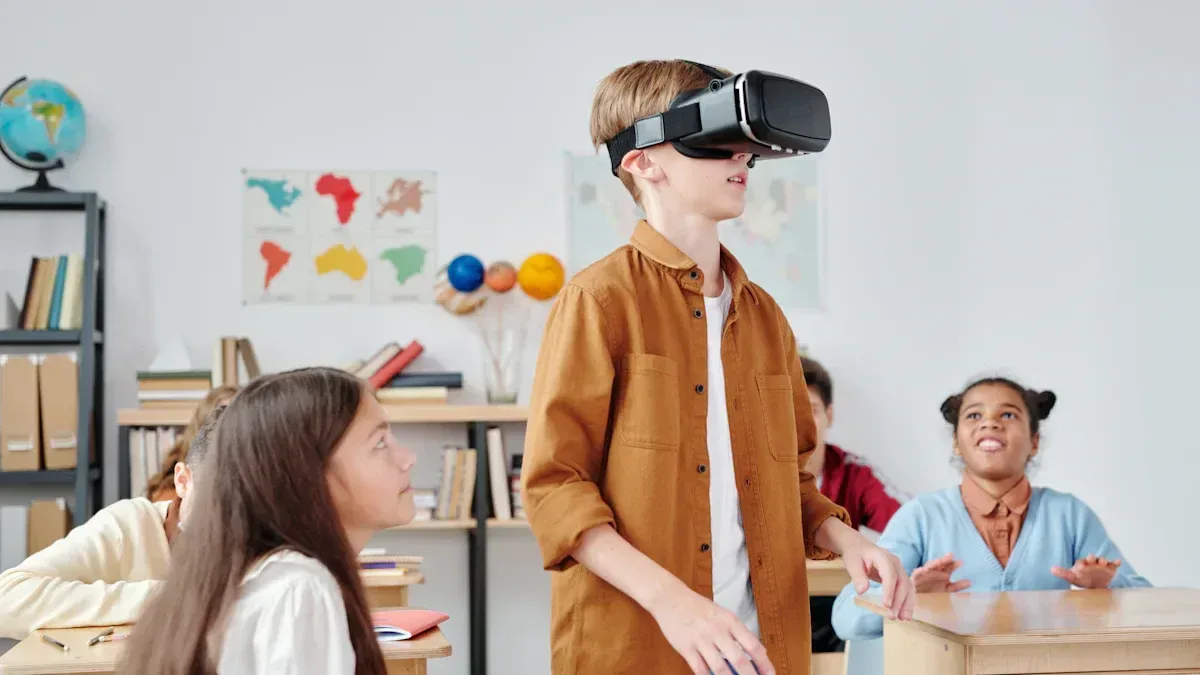
You can use VR cognitive training to support rehabilitation for a wide range of neurological conditions. Many patients with neuropsychiatric disorders experience cognitive impairments, which often include dementia, traumatic brain injury, and stroke. Over 70% of individuals with these disorders need effective strategies for cognitive recovery. VR-based interventions help improve cognitive functions and offer safe, effective solutions for rehabilitation.
- You may see improvements in working memory, language function, and visuospatial processing.
- Stroke patients often experience better motor function and balance after VR-based therapy.
- Enhanced self-confidence and self-reliance lead to improved psychosocial interactions.
- Increased brain plasticity supports cognitive recovery after stroke.
- Dexterity and grip strength improve, especially during the subacute phase of stroke.
- Spatial navigational memory skills, often affected by stroke, show measurable gains.
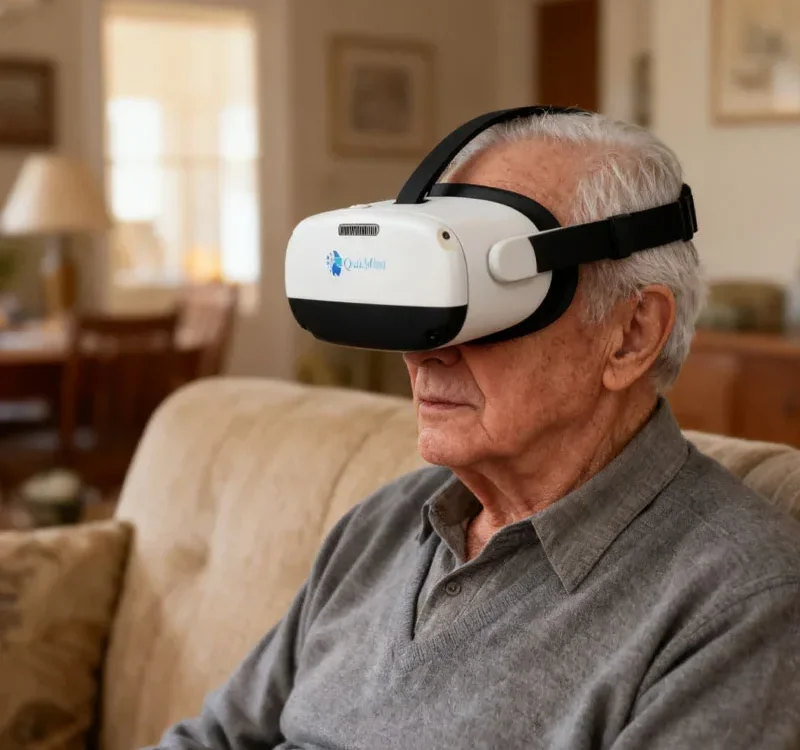
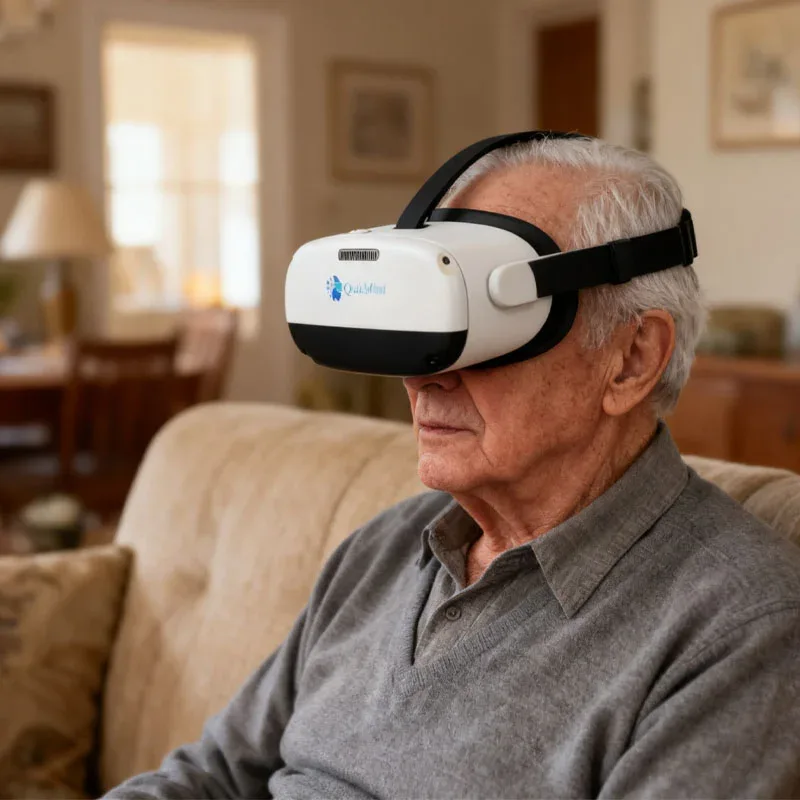
QuickMind® by Yiwei Medical stands out as a leading VR system for cognitive health assessment and rehabilitation. You benefit from its advanced technologies, including artificial intelligence, cloud computing, and big data analytics. QuickMind® provides a safe and engaging environment for elderly users, those with mild cognitive impairment, and dementia patients.
Home-Based and Clinical Use Cases
You can access VR cognitive training both at home and in clinical settings. Home-based programs immerse you in interactive environments that stimulate your mind and enrich your emotional well-being. Applications like QuickMind® make cognitive exercises accessible and convenient, even for users unfamiliar with technology.
- Shared experiences promote reminiscence therapy and emotional wellness.
- User-friendly designs encourage social connections and mental wellness from home.
- Remote implementation ensures accessibility, especially during challenging times such as the COVID-19 pandemic.
QuickMind® offers a user-friendly interface, making it easy for you to engage in personalized cognitive exercises. You can track your progress and enjoy tailored rehabilitation, whether you are at home or in a clinic.
| Feature | Benefit for Users |
|---|---|
| AI-driven analysis | Personalized cognitive training |
| Cloud computing | Secure data and remote access |
| User-friendly | Easy navigation for all ages |
VR cognitive training empowers you to take control of your cognitive health, providing effective solutions for rehabilitation and daily wellness.
Scientific Evidence and Future Directions
Key Research Findings
You can see strong scientific support for VR cognitive training and its impact on neuroplasticity. Research shows that VR-based interventions enhance cognitive functions in people with neuropsychiatric disorders. When you use immersive and interactive VR experiences, your brain forms new synaptic connections. These connections help you adapt and recover cognitive skills. VR environments combine different sensory inputs, which helps your brain create clear and strong cognitive representations. This process can even compensate for sensory deficits.
Specific VR tasks activate targeted brain regions. For example, navigation exercises stimulate your hippocampus, while social interaction scenarios engage your prefrontal cortex. These activities can repair or optimize brain function. The reward systems in VR also boost your motivation and learning outcomes, making cognitive rehabilitation more effective.
A study by Kang et al. (2021) found that VR cognitive training increases frontal-occipital functional connectivity. This improvement supports better visuospatial working memory. When you engage in VR activities, you help your brain adapt and strengthen memory and attention.
QuickMind® by Yiwei Medical stands out with its NMPA Class II certification and international approvals. You benefit from a product that meets high safety and efficacy standards, backed by rigorous research and development.
Limitations and Next Steps
You should know that VR cognitive training research faces some challenges. The table below highlights key limitations:
| Limitation Description | Source |
|---|---|
| Challenges in balancing ecological validity and experimental control in VR cognitive assessments. | Krohn et al., 2020 |
| Difficulty in accounting for contextual variables that affect cognitive performance assessments. | Holmlund et al., 2019 |
| Sparse literature on the psychometric properties of VR assessment tools. | Rus-Calafell et al., 2018; Park, 2022; Kirkham et al., 2024 |
| Low reporting of internal consistency and test-retest reliability in VR measures of executive functioning. | Kirkham et al., 2024 |
| Ceiling effects in VR assessment tools limiting discrimination of cognitive impairments. | Miskowiak et al., 2021 |
To advance VR cognitive training, you can focus on these next steps:
- Define clear objectives for VR integration in cognitive health.
- Identify specific skills gaps that VR can address.
- Select the right hardware and software for your needs.
- Raise awareness about VR benefits through public campaigns.
- Organize school-based sessions to educate families and professionals.
- Work with community health workers to promote technology acceptance.
Establishing a strong policy framework ensures ethical and responsible use of VR in clinical settings. You should consider guidelines for usage time, age suitability, and data privacy to protect users and maximize benefits.
You can enhance your brain’s adaptability and cognitive skills through VR cognitive training. This approach benefits a wide range of people:
| Population | Benefits |
|---|---|
| Elderly Individuals | Improved memory, daily activity performance, reduced loneliness, greater well-being |
| Neurological Conditions (TBI) | Better cognitive scores, engagement in real-world tasks |
QuickMind® leads the way in making these benefits accessible. Studies show that VR training improves memory, attention, and even physical function. You can use VR as a proactive tool to support long-term brain health and emotional well-being.
FAQ
What is VR cognitive training?
VR cognitive training uses virtual reality technology to create immersive exercises that challenge your brain. You interact with digital environments designed to improve memory, attention, and problem-solving skills.
How does VR cognitive training support neuroplasticity?
You stimulate your brain with multisensory activities in VR. This process helps you form new neural connections and strengthen existing pathways, which supports neuroplasticity and cognitive recovery.
Who can benefit from QuickMind® by Yiwei Medical?
You can benefit if you are an older adult, have mild cognitive impairment, or face dementia. QuickMind® provides personalized cognitive exercises for home or clinical use.
Tip: Early engagement with VR cognitive training may help you maintain cognitive health as you age.
Is VR cognitive training safe for home use?
You can safely use VR cognitive training at home. QuickMind® features a user-friendly design and secure cloud-based data management, making it accessible and reliable for daily use.
How do you track progress with QuickMind®?
QuickMind® allows you to monitor your cognitive performance through AI-driven analysis. You receive feedback and can adjust your training based on your results.