




Why QuickMind is likely to become the biggest dark horse in the brain health field
2025-12-09
How VR Fits into Modern Brain Wellness Routines
2025-12-25
Mild Cognitive Impairment (MCI) is a growing concern in cognitive health. Early detection is crucial for effective intervention. Traditional methods like the Montreal Cognitive Assessment (MoCA) have been widely used. However, they come with limitations such as subjectivity and cultural bias.
Enter eye-tracking technology, a promising MoCA alternative. This innovative approach offers a non-invasive and objective method for assessing cognitive function. Eye movement analysis can detect subtle changes in cognitive health. It measures parameters like fixation, saccades, and pupil dilation.
Eye-tracking cognitive assessment is gaining attention for its accuracy and efficiency. It can differentiate between healthy individuals and those with MCI. The technology is adaptable for various settings, including clinics and research labs. It can even be used at home for regular monitoring.
The integration of artificial intelligence enhances its diagnostic capabilities. Eye-tracking technology is continuously evolving, improving accuracy and usability. It represents a shift towards more personalized cognitive health assessments. This article explores why eye-tracking is the new frontier in early MCI detection.
Understanding Mild Cognitive Impairment and the Need for Early Detection
Mild Cognitive Impairment (MCI) sits between normal age-related changes and dementia. It affects memory, thinking, and judgment. However, individuals with MCI can often live independently.
Early detection is key. It allows for timely intervention to manage cognitive decline. Recognizing MCI early can help in maintaining quality of life for longer periods.
The progression from MCI to dementia is not certain. With early detection, interventions may slow progression. This can lead to better outcomes in cognitive health.
Symptoms of MCI can vary but often include:
- Memory lapses, noticeable but not disrupting daily life
- Difficulty concentrating or completing tasks
- Trouble remembering recent events or conversations
Understanding these symptoms allows for better health decisions.
Despite its importance, detecting MCI early is challenging. Many traditional assessments miss subtle signs. Eye-tracking technology provides a solution by offering detailed insight into cognitive function.

Limitations of Traditional Cognitive Assessments Like MoCA
The Montreal Cognitive Assessment (MoCA) is widely used for cognitive screening. However, it has certain limitations. One major issue is subjectivity; results can vary based on evaluator perspective.
Cultural bias is another concern. MoCA may not account for different cultural backgrounds. This affects the accuracy of assessments for diverse populations.
Moreover, MoCA sometimes fails to detect subtle cognitive changes. These initial changes are crucial for early MCI detection. Traditional tests often overlook these nuances.
Additionally, the MoCA requires specific conditions for administration. Patients need to be in a quiet environment, and evaluators should be well-trained. These factors can limit its feasibility across diverse settings.
Some limitations of MoCA include:
- Subjective evaluations affected by assessor biases
- Cultural biases not accommodating all backgrounds
- Misses subtle cognitive changes essential for early detection
- Need for controlled environments and trained administrators
Therefore, while MoCA has its utility, its limitations are significant. Exploring alternative methods becomes essential. Eye-tracking technology offers promise in addressing these gaps by providing more objective data.

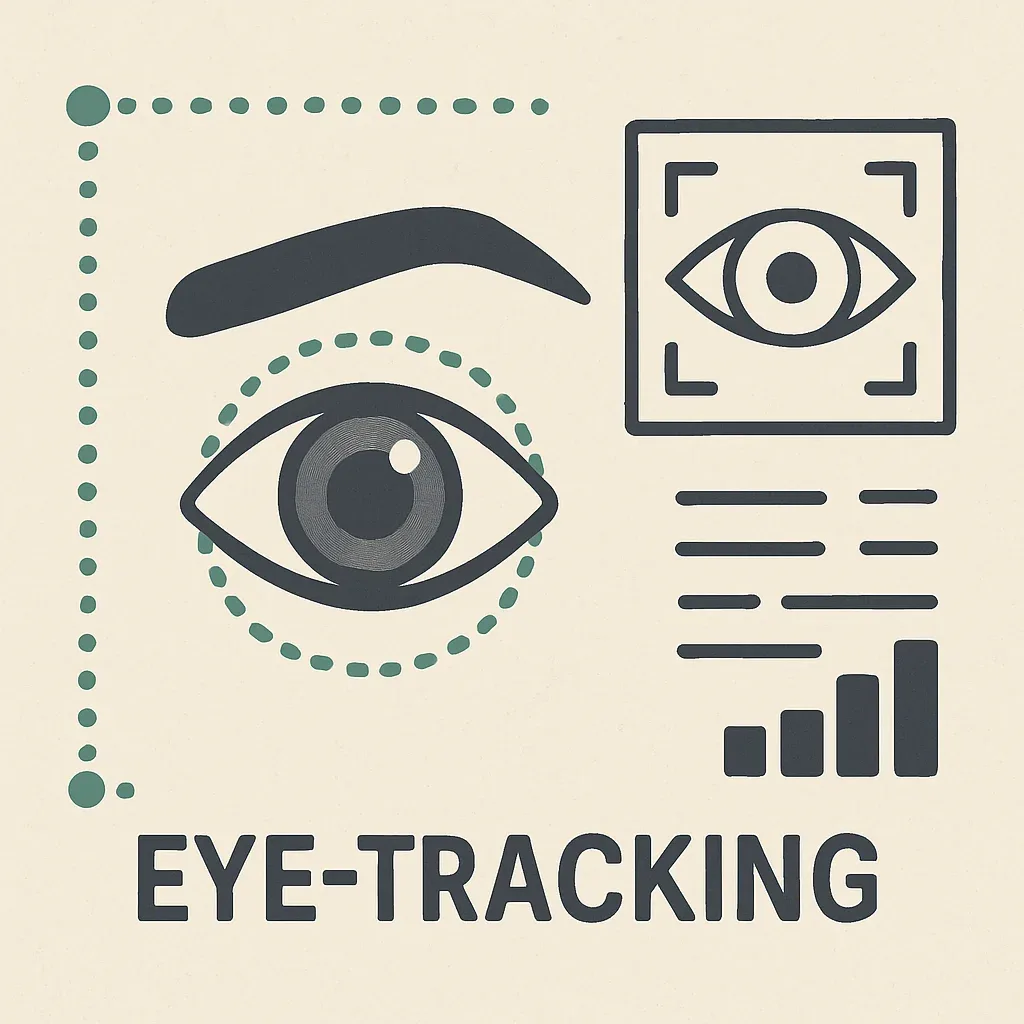
What Is Eye-Tracking Technology? An Overview
Eye-tracking technology is an innovative method that monitors eye movements. It captures detailed data about how the eyes move and focus. This technology consists of hardware and software components working together.
At its core, eye-tracking involves detecting eye positions and movements using infrared cameras. The cameras track where a person looks, how long they look, and their pupil size. These metrics provide valuable insights into cognitive processes.
The technology analyzes various eye movement parameters, including:
- Fixations: where the gaze pauses
- Saccades: rapid eye movements between points
- Pupil dilation: changes in pupil size during tasks
These metrics help in understanding cognitive function. For instance, longer fixation times can indicate difficulty in processing information. In contrast, rapid saccades might suggest effective information scanning.
Eye-tracking devices are versatile and can be used in different settings. They’re adaptable for clinics, research labs, and even home environments. This flexibility makes them valuable tools for ongoing cognitive health monitoring.
In conclusion, eye-tracking technology offers a window into the mind. It harnesses the subtle language of the eyes to decode cognitive health. This precision sets it apart as a cutting-edge tool for early MCI detection.

How Eye Movement Analysis Reveals Cognitive Health
Eye movement analysis is a powerful tool for evaluating cognitive health. By studying eye movements, we can uncover changes not visible to the naked eye. This form of analysis taps into deep cognitive functions.
The eyes offer a direct pathway to the brain’s workings. Changes in eye patterns can indicate various cognitive issues. For instance, inconsistencies in saccades and fixations can signal attention and memory problems.
What makes eye movement analysis stand out is its non-invasive nature. It doesn’t require invasive procedures or complex equipment. Instead, it employs natural, passive monitoring of eye behaviors.
This technology captures several key parameters:
- Duration and pattern of fixations
- Velocity of saccades
- Reactions of pupils during cognitive tasks
These metrics reveal important details about cognitive function. A slower saccade velocity might denote decreased cognitive processing speed. Increased fixation duration can point to difficulties in understanding tasks.
A strong advantage of eye movement analysis is its objective nature. Unlike subjective assessments, it provides quantifiable data that clinicians can rely on. This reliability helps make diagnoses more precise.
Finally, research supports its use in revealing early signs of cognitive decline. Eye movement data can be a vital part of early intervention strategies. In the right hands, this information leads to more tailored treatment paths for patients.

Eye-Tracking Cognitive Assessment: How It Works
Eye-tracking cognitive assessment is a breakthrough in assessing mental functions. This approach uses specialized software and hardware to monitor eye movements accurately. It provides a window into the brain’s cognitive processes.
To conduct an eye-tracking assessment, individuals perform tasks while their eye movements are recorded. The technology captures minute details like where and how long eyes focus. It also notes how quickly eyes shift between objects.
A typical assessment involves placing the participant in front of an eye-tracking device. This device uses cameras and sensors to track the eyes’ path. The tasks are often simple yet informative, designed to provoke specific cognitive responses.
Eye-tracking technology analyzes these responses by examining:
- Fixation patterns
- Speed and direction of saccades
- Pupil size variations during tasks
By interpreting the data, clinicians can identify signs of cognitive impairment. For example, delayed saccades can suggest slower processing speeds. Unusual fixation patterns might indicate attention or memory challenges.
An advantage of this method is its speed and simplicity. It doesn’t require extensive training for those administering the assessments. This makes eye-tracking an accessible tool even for smaller clinics and research facilities.
Incorporating eye-tracking into routine cognitive assessments offers numerous benefits. It enables healthcare providers to detect early signs of cognitive decline with greater accuracy. These insights can then inform more personalized and effective intervention strategies.

Comparing Eye-Tracking with MoCA and Other Traditional Tools
Eye-tracking technology is making waves as a MoCA alternative. Traditional cognitive assessments like MoCA have been the standard for years. However, they are not without flaws.
MoCA involves subjective scoring and cultural biases. It often requires interpretation by trained professionals, adding an element of subjectivity. Furthermore, these assessments might overlook subtle cognitive changes.
In contrast, eye-tracking provides a more objective view. It analyzes precise eye movements, offering quantifiable data. This method reduces biases and increases accuracy.
Several aspects differentiate eye-tracking from traditional tools:
- Objectivity in data collection
- Ability to detect subtle cognitive changes
- Minimal training required for administration
These distinctions make eye-tracking particularly useful. It shines where traditional methods struggle, such as with language barriers. Eye-tracking can evaluate cognitive function universally.
Moreover, eye-tracking excels in early detection. Subtle changes in eye behavior can signal early MCI before other symptoms appear. This early intervention capability is crucial in managing cognitive decline effectively.
While MoCA and similar tests remain valuable, eye-tracking offers additional insights. As research continues, eye-tracking could become a standard part of cognitive assessments. Its promise lies in precision and adaptability.

Key Research and Clinical Evidence Supporting Eye-Tracking for Early MCI
Research into eye-tracking technology highlights its potential in detecting early Mild Cognitive Impairment (MCI). Numerous studies have demonstrated its effectiveness. It consistently shows high accuracy in distinguishing between healthy individuals and those with MCI.
Clinical trials underscore the precision of eye movement analysis. Parameters such as saccades and fixations reveal cognitive health insights. These markers are finely tuned to detect subtle declines not observed in traditional tests.
Several key studies have been pivotal:
- Study A: Demonstrated 90% accuracy in identifying MCI via eye movements.
- Study B: Illustrated how eye-tracking predicts cognitive decline over time.
- Study C: Showcased the technology’s effectiveness across diverse populations.
The comprehensive data from these studies supports eye-tracking’s role in early detection. Such early diagnosis is crucial for timely intervention, leading to improved outcomes. Unlike subjective tests, eye-tracking provides quantifiable metrics.
Moreover, this technology doesn’t stop at detecting MCI. It offers insights into various cognitive domains, including memory and attention. The evidence suggests that eye-tracking could transform cognitive assessments in clinical settings.
As more research is conducted, eye-tracking technology’s applications will expand. The integration of artificial intelligence in eye movement analysis shows promise. This evolution can further enhance diagnostic accuracy and predictive capabilities.

Practical Benefits and Applications in Clinical and Everyday Settings
Eye-tracking technology offers numerous practical benefits in both clinical and everyday settings. This non-invasive and objective method streamlines cognitive assessments. It provides reliable data quickly and efficiently.
In clinical settings, eye-tracking technology is adaptable and easy to implement. It can be integrated into routine check-ups, allowing regular cognitive health monitoring. This ease of use broadens its applicability across different healthcare environments.
Beyond clinics, eye-tracking technology holds promise for use at home. People can assess their cognitive health regularly, allowing for the early detection of any changes. This accessibility empowers individuals and their caregivers.
Key benefits and applications include:
- Ease of Use: Quick assessments without extensive training.
- Broader Reach: Effective even in language and physical barriers.
- Cost-Effective: Reduces costs associated with traditional, labor-intensive assessments.
- Versatile Utility: Usable in clinics, research labs, and home environments.
Eye-tracking technology is particularly useful where traditional tests fall short. In multicultural or multilingual populations, it bypasses language biases. The technology also assists individuals with limited physical capabilities.
As technology advances, eye-tracking will become even more integral in cognitive health strategies. Its potential to enhance personalized care plans and interventions is significant. This evolution marks a shift towards more accessible and precise cognitive assessments.

Challenges, Limitations, and Future Directions
While eye-tracking technology is promising, it faces several challenges. One primary issue is the initial cost of the equipment. Despite being cost-effective in the long run, the upfront investment can be a barrier for some facilities.
The technology also requires continuous refinement. Ensuring accuracy and reliability is crucial as eye-tracking systems advance. Developers must address variability between different hardware setups and user conditions.
Furthermore, integrating this technology into existing healthcare systems presents hurdles. Compatibility with current practices and training professionals to use new tools demands time and resources. The transition needs careful planning and support.
Future directions for eye-tracking technology include the following areas:
- Hardware Innovations: Development of more affordable and user-friendly devices.
- Improved Algorithms: Enhancement of software for higher accuracy.
- Wider Applications: Expansion into other cognitive and neurological fields.
- AI Integration: Utilizing artificial intelligence for deeper insights and predictions.
Despite challenges, the future of eye-tracking is bright. Continuous research and development will enhance its applications and ease of use. As the technology evolves, its role in cognitive health will likely expand.

Conclusion: The Promise of Eye-Tracking as a MoCA Alternative
Eye-tracking technology represents a significant advancement in cognitive assessments. It offers a non-invasive and objective method to detect early MCI. With its high accuracy and swift administration, eye-tracking stands out as a promising MoCA alternative.
The adaptability of eye-tracking systems allows for their integration into varied environments. Whether in clinical settings or potentially at home, this flexibility is a key advantage. Moreover, eye-tracking opens the door to personalized assessments, catering to the unique needs of each individual.
As research and development continue, eye-tracking will likely further establish its place in cognitive health. The technology holds the potential not only to enhance our understanding of cognitive decline but also to transform how we approach diagnosis and treatment. Its promise is both exciting and far-reaching.